I have a soft spot for the packing table in a growth discussion.
It is a wonderfully concrete object. The campaign has plans. The forecast has plans. The table has four legs and a limited amount of room.
A business might have found an offer that attracts suitable customers. That is encouraging. The next question is whether it can deliver the same experience at a greater pace.
The campaign result is one part of that decision. Stock, response time, fulfilment and support may have their own limits.
Visit the other end of the promise
For an invented small-shop review, imagine that a clearer product offer has brought more orders. The item is available, but the person preparing parcels also handles enquiries and checks stock.
A larger order total affects all three tasks. The advertisement can create interest much faster than the business can rearrange its working day.
I would ask what happens when the pace increases. Where does work queue up? Which promise might become difficult to keep? What would a customer notice first?
The answer may be a longer response time, a missed dispatch expectation or a colleague with no space left to deal with an unusual request.
These are not arguments against growth. They are information for choosing a pace the business can support.
The person doing the work should have a voice in the plan. They may know that one part can scale easily while another needs an extra arrangement. A general claim of “we can handle more” can conceal that difference.
Choose a next step with a stopping point
I prefer a manageable increase with a review that includes the customer experience as well as the account.
Keep the offer conditions clear. Watch the relevant operational signals. Agree who can slow the campaign if the arrangement stops working.
This isn't a demand for an enormous committee before every budget change. A small business can have a short, practical conversation. The conversation still needs to happen.
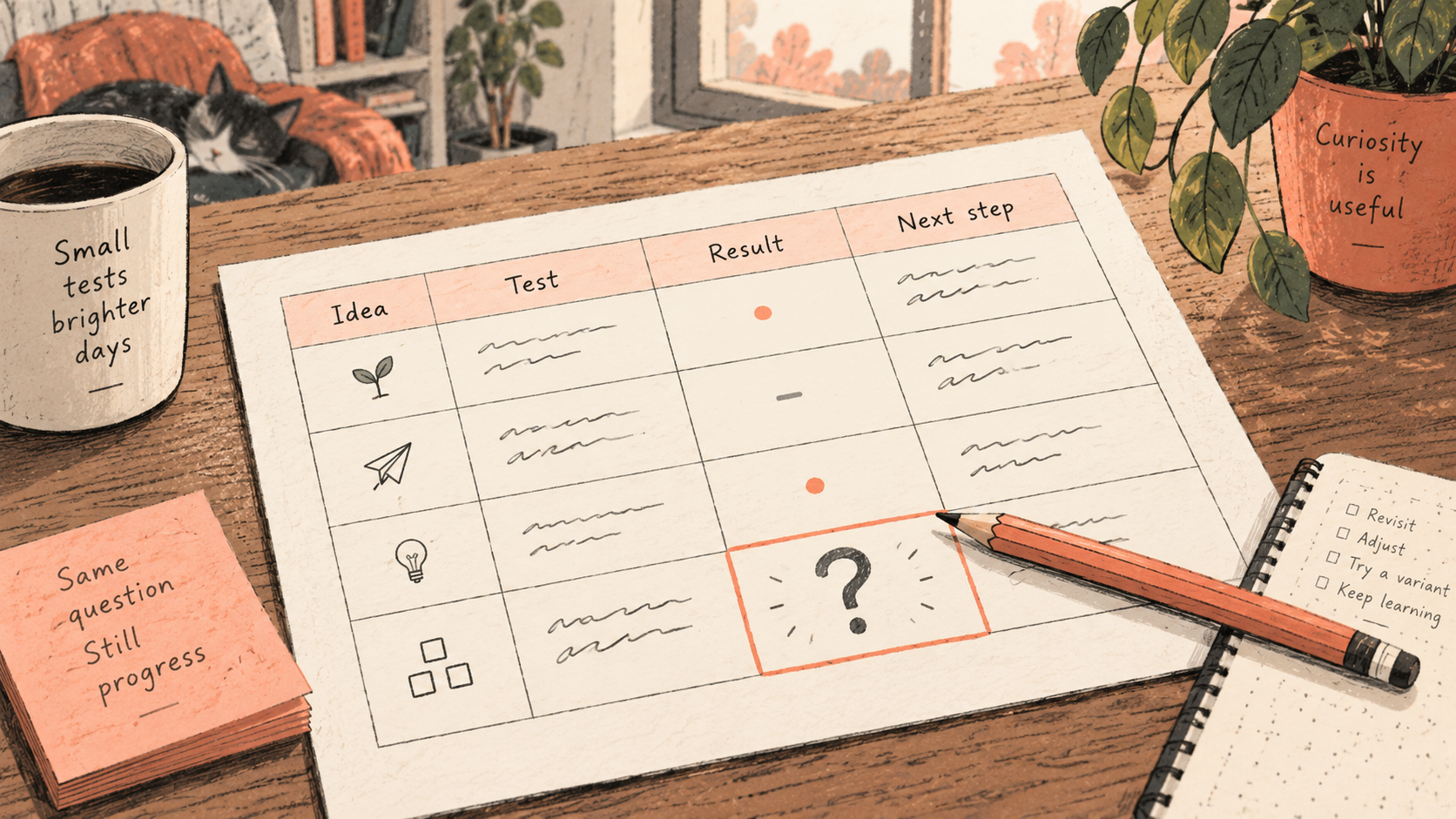
The experiment record should say what we are trying to learn. Perhaps the offer can attract a larger number of suitable customers while the business maintains its stated response and delivery arrangements.
That is more useful than “scale the winner,” which tends to conceal several assumptions in three enthusiastic words.
Capacity changes can be part of the opportunity
Sometimes the sensible next investment is operational. A clearer handover, a different fulfilment arrangement or another person handling replies may make further acquisition more workable.
Marketing can help describe the demand and its rhythm. It should not pretend an account setting can solve every limit at the packing table.
There is also a commercial judgement about which orders or requests are worth pursuing. The business needs to make that judgement with its actual costs and service priorities, rather than letting volume alone decide.
I enjoy a campaign that starts working. I enjoy it even more when the business can continue fulfilling the promise.
That means keeping the ordinary reality beside the exciting chart. The table, the inbox, the timetable and the people doing the work belong in the growth conversation.
They are occasionally a bloody inconvenient reminder that a click happens much faster than a parcel gets packed.
They are also the reason the customer can be pleased after the click.

A thought worth keeping?